How to Plan Your Roadmap to Your First 1,000 Community Members
A staged approach to community growth, covering invite-only beginnings, referral loops, meaningful metrics, and knowing when to open the doors wider.
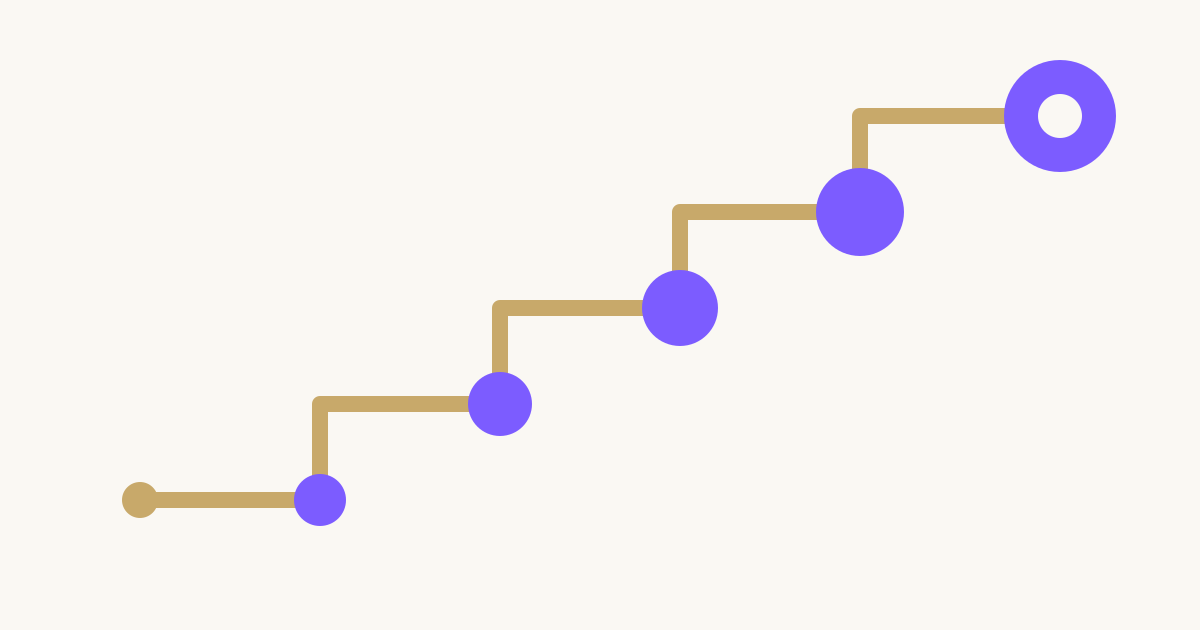
You have twenty people in a group chat who genuinely care about the thing you are building around. The conversation is good. Posts get replies within hours. Someone just shared a resource that everyone found useful. This is the moment most community builders rush past, eager to get to bigger numbers. Slowing down here, and being deliberate about who comes next, is what separates communities that stay alive at 500 members from ones that go quiet at 50.
Why Invite-Only Is a Feature, Not a Limitation
An open launch feels generous. Anyone can join, discovery is frictionless, and the member count climbs fast. The problem is that your culture forms in the first few hundred conversations. If those conversations happen between people who showed up because a link was easy to click, you get a culture of passive lurkers. You have almost no ability to course-correct it later without losing people.
Starting with invited members forces a useful constraint. Every person in the room arrived because someone who already trusted the space vouched for them. That creates a shared baseline of behavior. It also gives you a small, observable cohort to study before you scale anything. Watch what they post, what they ignore, which threads go quiet, and which ones pull everyone in. That data is worth more than any growth playbook.
A good starting size for an invite-only phase is somewhere between 15 and 50 members. Small enough to know everyone by name, large enough to have real conversations without you carrying every thread.
Building the Referral Loop Before You Need It
Referrals work when members have something concrete to share, not just a vague sense that the community is good. Give your early members a specific reason to invite someone. It could be a thread topic that is genuinely better with more perspectives, an upcoming event that benefits from a full room, or a resource that would help someone they already know. The invitation should feel like a favor to the person being invited, not a recruitment pitch.
The loop you want looks like this: a member has a good experience, they think of someone specific who would also benefit, they share an invite with that person, the new member joins with a warm expectation already set. Each step in that chain depends on the previous one working. If the experience inside the community is thin, nothing downstream improves it.
You also need a public entry point running alongside the private referral path. A free resource, a newsletter, a short course, or a public forum thread gives people a way to find you without already knowing someone on the inside. This is how you avoid the insularity that kills invite-only communities. The public entry point is a waiting room, not a replacement for the referral loop.
What to Measure at Each Stage
Raw signup counts will mislead you at every stage. A community of 200 active contributors is harder to build and more durable than one of 2,000 people who never post. Track the metrics that tell you whether the community is actually working.
In the earliest phase, the number to watch is posting rate among new members in their first two weeks. If someone joins and never posts, they almost certainly never will. A healthy sign is that more than half of new members contribute at least once within 14 days of joining. If that number is low, the onboarding experience is the problem, not the growth channel.
Once you are past the first 100 members, shift your attention to return rate. How many members come back in a given week without you prompting them? This is harder to game than signup numbers and harder to fake. It tells you whether the community has developed a pull of its own.
After 250 or so members, watch for peer-to-peer replies, meaning threads where members are responding to each other rather than only responding to you or your team. That shift is the sign that the community is becoming self-sustaining rather than dependent on your presence to generate energy.
When to Widen the Door
There is no universal member count that signals readiness to open up. The better signal is behavioral. You are ready to grow faster when new members are being welcomed by existing members before you even see the join notification, when threads are getting replies you did not write, and when the community has a recognizable voice that you did not have to enforce.
Opening up does not mean removing all friction. An application form with two or three substantive questions still filters for intent. A short orientation sequence still sets expectations. The goal is to make the process faster and more accessible, not to eliminate the culture-setting mechanisms that made the early community work.
Widening the door during a period of low internal activity will not fix the activity problem. Growth amplifies whatever is already happening. If threads are quiet, more members will make them quieter, not louder.
The Document That Keeps You Honest
A community roadmap is not a marketing calendar. It is a document that specifies the current phase, the metric threshold that triggers the next phase, and the single change you will make when that threshold is hit. That is all it needs to be. One phase, one metric, one change.
Keep it short enough to reread in two minutes. Review it every month and update it based on what you actually observed, not what you hoped would happen. The roadmap is a tool for making decisions under uncertainty, not a forecast.
Right now, before you do anything else, write down the one metric that would tell you your community is ready for its next growth phase. Specificity matters. Not "more engagement," but something like "at least 40% of members from the past 30 days posted at least once." That number, written down and shared with anyone helping you run the community, is the most useful planning artifact you can produce today.
Start Building Your Community